Genetic study helping islanders foresee and forestall disease
More than 60 people from Scotland’s Northern Isles have been given personalised health insights to support their future care after receiving bespoke genetic results as part of a study into the region.
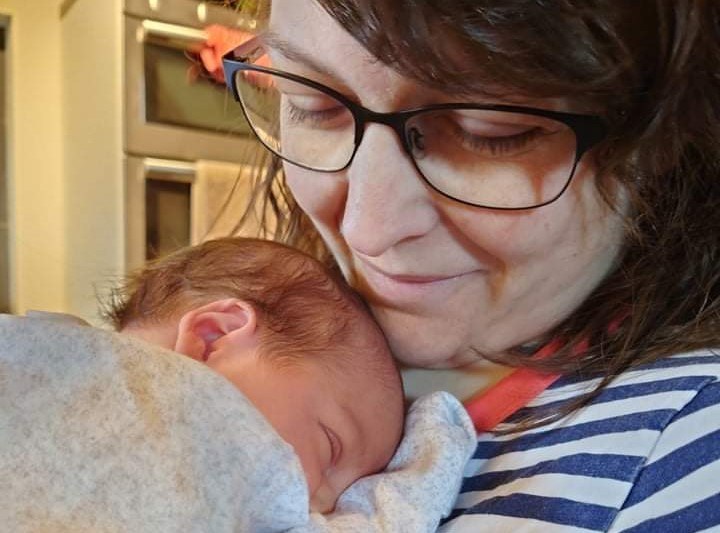
Study volunteer Jacqueline and baby Olla
Researchers from the Viking Genes research project, led by the University of Edinburgh, identified 108 genetic variants – differences in a person’s DNA – in 23 genes, which can be linked to conditions like cancer and heart disease.
These results were then communicated to participants, giving them the opportunity to undertake personalised treatment for their condition.
Experts say it is one of the UK's first extensive efforts in returning clinically actionable genetic results to people involved in the study.
The letters were funded by a Wellcome Trust Institutional Translational Partnership Award (iTPA), through the iTPA team at Edinburgh Innovations.
After receiving a letter advising him of a variant in the BRCA2 gene, volunteer John Arthur, from Shetland, underwent tests that showed he had prostate cancer. He underwent a successful operation in February to remove his prostate and is already back at work on his fishing boat.

Volunteer Christine discovered she had breast cancer thanks to the study and was able to be treated
Another Shetland volunteer, Christine (pictured above), went for a mammogram after being told she had the BRCA2 gene. The scan found breast cancer. After undergoing a double mastectomy and having lymph nodes removed, she was given the all-clear in 2024. She said:
I am so grateful you told me I have BRCA2, as my next mammogram would have been in another two years! It might have been a different story! I cannot stress enough the importance of this research.
Christine
Viking Genes study volunteer, Shetland
And Jacqueline (main picture) was informed she carried the TTN gene variant, which can increase the risk of developing the heart condition dilated cardiomyopathy. She is now taking daily tablets to protect her heart, and receiving regular hospital monitoring. Her daughter Olla will also be tested.
The research also revealed that 10 of these disease-causing variants were much more common in either Orkney or Shetland than elsewhere in the UK.
Experts say the findings demonstrate the power of targeted genetic screening to help improve the health of people from isolated communities.
These ground-breaking new results from the Viking Genes project underscore the critical role of genetic research in foreseeing and forestalling disease.
By tailoring our approach to fit specific genetic backgrounds, we can offer more precise, predictive, and preventative healthcare, thereby protecting communities, preserving health and saving lives.
The results of this study provide a foundation for creating bespoke genetic screening programs for the Scottish Islanders and other unique genetic populations.
Jim Flett Wilson
Chair of Human Genetics, University of Edinburgh's Usher Institute and Institute of Genetics and Cancer
As well as demonstrating the health and economic benefits of genetic screening of high risk populations, we have also shown the importance of including funding to notify participants of actionable results in this kind of research. The University of Edinburgh has been shaping improvements in health provision across the UK for 400 years and this is another important step.
Jeff Wright
Entrepreneur-in-Residence, Early Career Research/iTPA team, Edinburgh Innovations
Since 2005, Viking Genes has recruited over 10,000 volunteers from the Northern and Western Isles of Scotland — regions known for their unique gene pools due to historical isolation and limited migration. This distinct genetic background provides a powerful tool to identify rare but medically significant genetic variants, experts say.
It has previously identified clusters of rare breast and ovarian cancers in Shetland and Orkney involving the BRCA1 and BRCA2 genes.
The study is published in the American Journal of Human Genetics. It was funded by the Medical Research Council and involved researchers from the University of Edinburgh, the University of Aberdeen and the Regeneron Genetics Center.