New device could replace animals used in drug and chemical safety testing
A novel 3D printed device that could replace the need for drug and chemical safety testing on animals has received new funding.
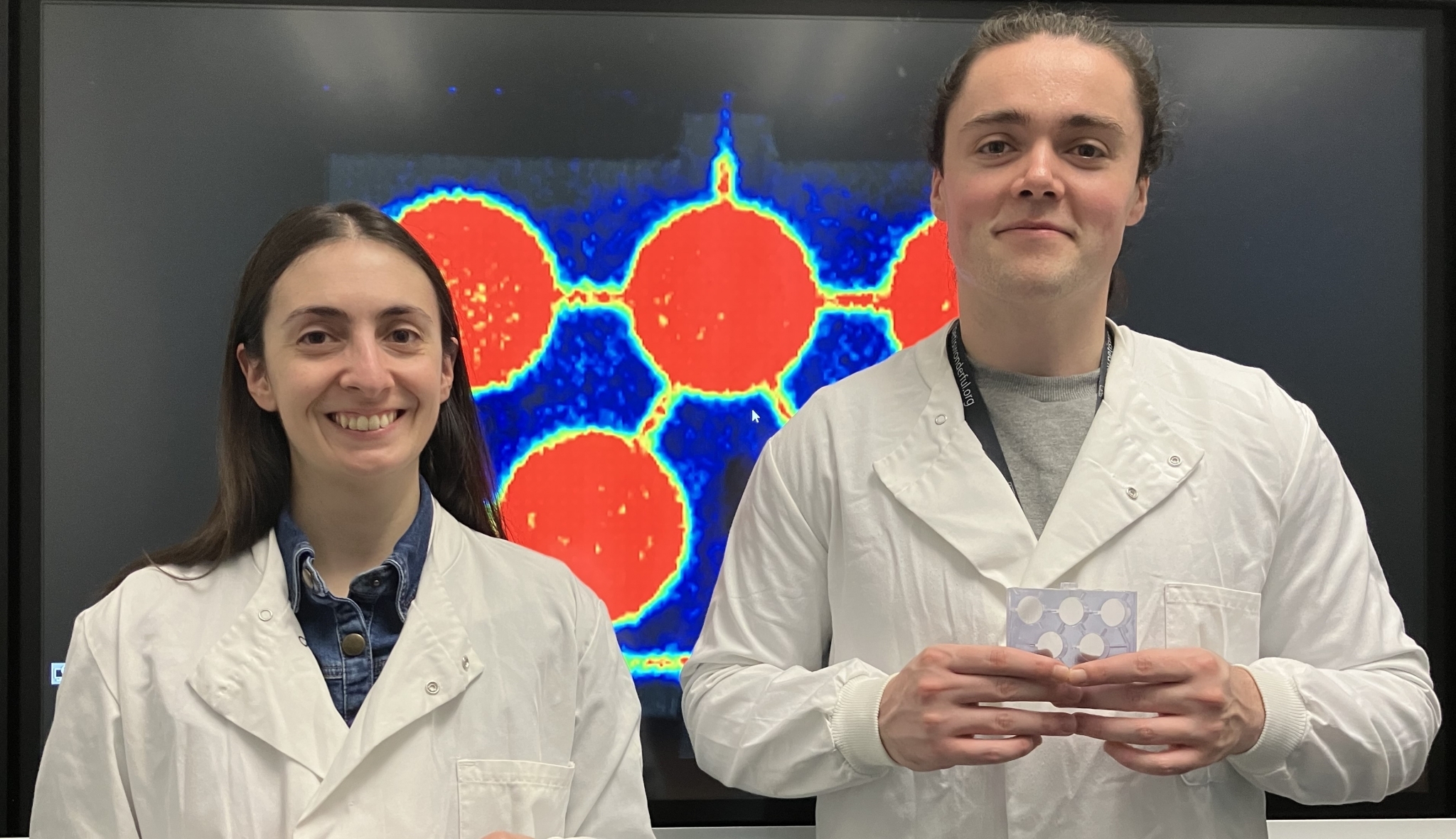
Dr Adriana Tavares and Liam Carr holding the body-on-chip, in front of a PET image of the device
The plastic ‘body-on-chip’ device, invented at the University of Edinburgh, mimics how a drug moves through the body’s organs, using PET imaging to validate its journey.
The team behind it has received £260,000 from the Medical Research Council (MRC) to test it using sterile materials, after its ability to replicate drug perfusion was proven and presented at the Microphysiological systems (MPS) World Summit in Germany this summer.
Currently being 3D-printed in collaboration with the Edinburgh College of Art, its five compartments contain human cells representing the heart, lungs, kidney, liver and brain, connected by channels that mimic the human circulatory system, through which a small molecule drug is pumped.
Using mathematic modelling, we have found that the rate of transfer into the organ compartments and the uptake of nutrients in vitro mimics in vivoorgan results.
“It’s been really exciting to be able to use PET imaging to modify the device and produce even flow through all organ compartments.
Liam Carr
In vitro pharmacology PhD student and device inventor, University of Edinburgh
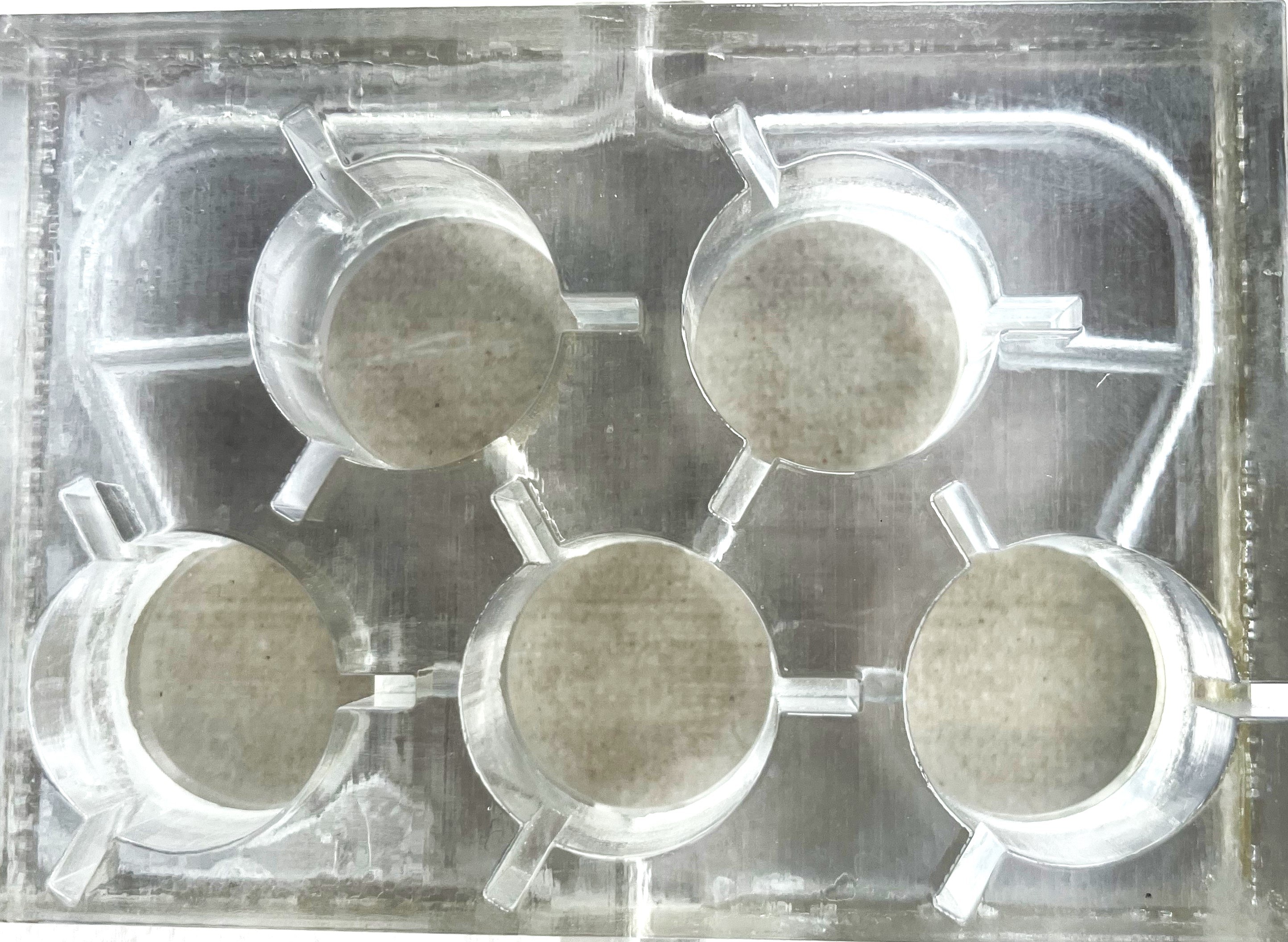
The body-on-chip device
The success of the body-on-chip (pictured above) so far shows potential even beyond drug development - to test aerosols, food and household products. It also holds the possibility of adding more compartments to represent other organs such as the stomach or skin, in states representative of both human health and disease.
This device shows really strong potential to reduce the large number of animals that are used worldwide for testing drugs and other compounds, particularly in the early stages, where only two per cent of compounds progress through the discovery pipeline.
Adriana Tavares
Centre for Cardiovascular Science, University of Edinburgh
Currently, around 80,000 animals are used in the early stages of drug development in Europe each year, without subsequent clinical benefit.
The body-on-chip device was developed through a National Centre for Replacement, Refinement and Reduction of Animals in Research (NC3Rs) and Unilever co-funded PhD Studentship award of £90,000. It has been supported and protected by Edinburgh Innovations, the University’s commercialisation service.
Liam’s body-on-chip device has the potential to replace a significant number of the animals currently used in safety testing across a range of industries. It is fantastic to see one of our PhD students awarded funding at this early career stage. This additional funding from the MRC recognises Liam and the CVS team’s pioneering work to transform drug testing in a human-cell-based model and the importance of finding alternative approaches to replace animal use in these studies.
Natalie Duggett
Early Career Programme Manager, NC3Rs
We’re delighted to be supporting Liam and the CVS team in the development of this ‘body-on-chip’, and we look forward to seeing the impact this novel device has on testing and progression of new compounds and drugs in the future.
Susan Bodie
Head of Business Development, College of Medicine and Veterinary Medicine, Edinburgh Innovations