Edinburgh Protein Production Facility
A centre of excellence for protein expression and purification and biophysical analysis of proteins and their ligands.
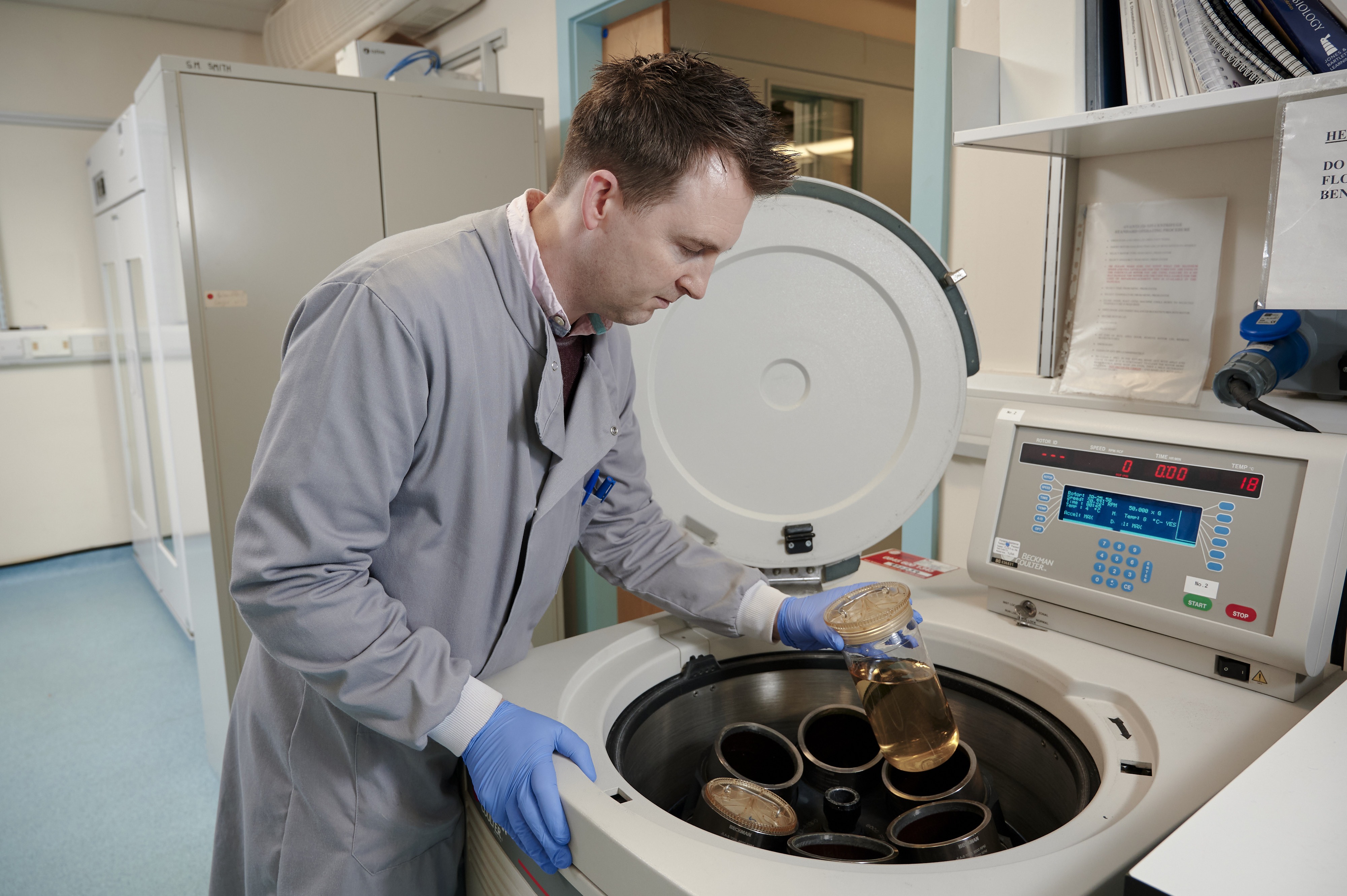
Maverick Photography
Providing a full service for biopharma users and beyond
The Edinburgh Protein Production Facility (EPPF) is a centre of excellence for protein-related life science projects.
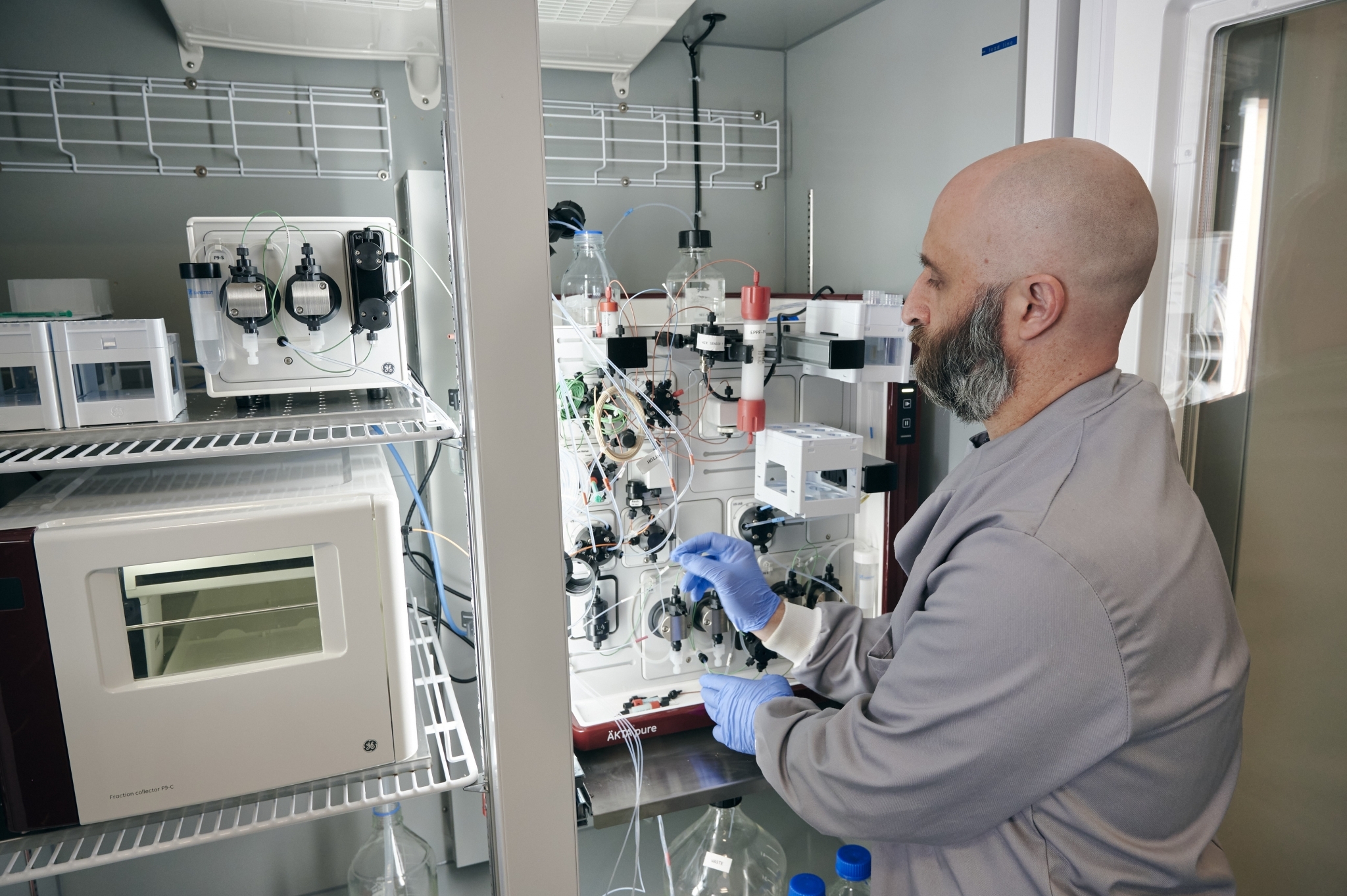
Maverick Photography
Facility expertise
Staff have knowledge of the capabilities and limitations of the equipment and user experiments, as well as a high-level understanding of the theory and wider biological context. This ensures more effective and efficient research results. Practical training (basic and advanced) for users, ranging from individually tailored one-on-one instruction to frequent centralised training courses are offered.
The highly-trained facility staff have more than 80 years combined expertise in molecular biology, protein expression and purification and biophysical analysis of proteins and their ligands. They have been involved in driving large, complex biophysical themes within multi-disciplinary projects.
Industry sectors that can benefit:
- Agritech, agri-food and plant biology
- Healthcare and disease
- Life sciences and industrial biotechnology
- Pharmaceuticals and medical biotechnology
Facility expertise
Staff have knowledge of the capabilities and limitations of the equipment and user experiments, as well as a high-level understanding of the theory and wider biological context. This ensures more effective and efficient research results. Practical training (basic and advanced) for users, ranging from individually tailored one-on-one instruction to frequent centralised training courses are offered.
Equipment available
The EPPF has the following equipment in one place to allow for the whole research pipeline:
- 7 modern liquid chromatography systems
- a large resin/column library, configured to give flexibility for production and purification
- capacity for the culture of bacteria, yeast, and mammalian cells
- a comprehensive suite of analytical instruments for examining the biophysical state of proteins and protein complexes
- surface plasmon resonance (SPR) instruments for studying kinetics
- calorimetry (ITC) instruments for studying thermodynamics
- a series of spectroscopy and light scattering technologies (DLS and MALS), to define the size, shape and activity of proteins or protein reagents, in their native solution states
Maverick Photography
Case study: Helping researchers produce better livestock feed
The microorganisms that live in the guts of livestock play a vital role in helping animals extract energy from their feed. For example, while chickens are unable to digest fibre on their own, their gut microorganisms can produce enzymes that break down fibre into small molecules that the chicken can use as an energy source.
Laura Glendinning from the Roslin Institute and her team selected 18 proteins (which were abundant in fast-growing chicken breeds) for their research project, to characterise the protein’s potential as feed-additive enzymes.
The team used the Edinburgh Protein Production Facility to tested whether they were able to produce these enzymes in the lab, which enabled them to successfully produce 14 of 18 proteins. They then used the EPPF to test whether these proteins were able to break down two types of fibre that are commonly found in livestock feed. The facilities enabled the team to identify eight enzymes that could degrade these types of fibre and are therefore of interest as potential livestock feed additives.
Production Facility team were incredibly helpful and communicative. As a microbial ecologist, I had no previous experience in enzyme production. The expertise of the EPPF team was therefore essential in helping me deliver my research objectives.
The team offered substantial advice during the project design stage, and I was kept fully up to date with the team’s progress on producing and characterising the enzymes. I would heartily recommend the EPPF to any researchers interested in protein production.
Laura Glendinning
Roslin Institute
I have worked with Edinburgh Innovations for more than 15 years now in my role as facility manager of the EPPF. In that time, they have helped ensure the process of engaging with clients is a smooth one: from setting up agreements, to dealing with invoicing and client negotiations.
Martin Wear
Manager, Edinburgh Protein Production Facility.
Find out more
Interested in learning more?
Speak to our expert

Cameron Chalmers
Consultancy Manager

Cameron Chalmers bio
Cameron Chalmers
Consultancy Manager