Natural ‘fingerprints’ show captured CO2 is permanently locked into rock at Iceland site
A new monitoring approach could cut costs and complexity for large‑scale underground CO2 storage, a study from the University of Edinburgh has shown.
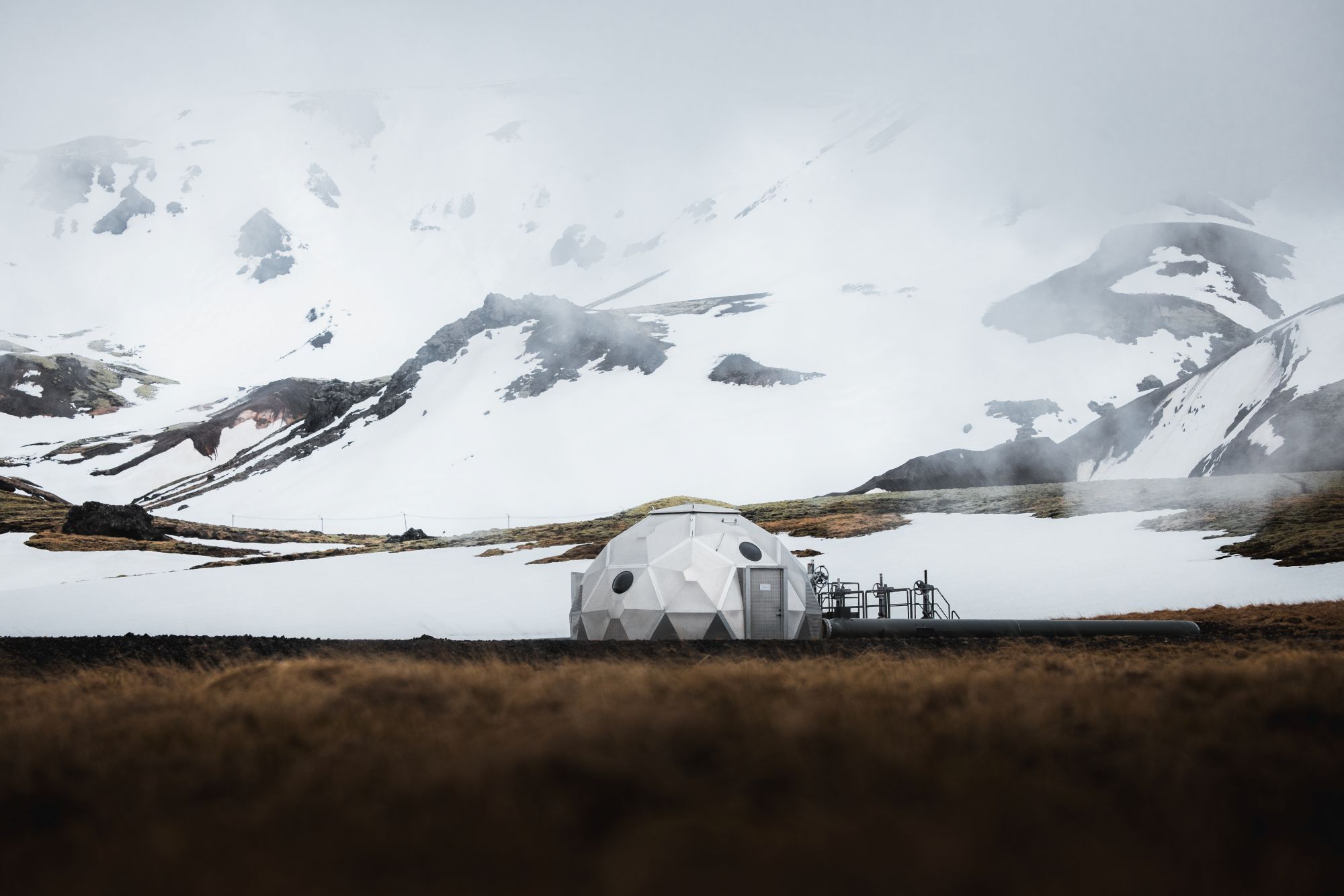
Carbfix injection well at Hellisheidi, Iceland.
Carbfix
The study found that captured CO2 injected into volcanic rocks in Iceland was successfully locked away as solid minerals, as shown by its natural chemical “fingerprints”.
The approach reduces the need to add artificial tracers and could make it simpler and cheaper to prove that CO2 is stored safely and permanently underground - a key requirement for large‑scale carbon capture and storage (CCS) projects serving hard-to-abate industries such as cement and steel production.
This mineralisation method locks away CO₂ permanently, so its carbon removal credits are expected to command higher prices than many nature-based projects, which may only store carbon for 100 years or less.
Researchers tracked what happened to injected CO2 at mineralisation operator Carbfix’s storage site in Iceland by analysing tiny, naturally occurring differences in the types of carbon, water and noble gases in the system.
The CO2 was dissolved in water, injected deep into basalt rock, and then monitored over time using these natural chemical signatures. Samples from underground monitoring points showed the CO2 reacting with the rock to form solid carbonate minerals.
The study, published in the International Journal of Greenhouse Gas Control and funded by the Natural Environment Research Council (NERC), demonstrates that using inherent isotopes and gases could offer a robust, lower‑intervention monitoring and verification (MRV) tool for commercial CO2 storage.
Overall, the monitoring data lined up with mineralisation levels previously reported at the Carbfix site, adding weight to earlier evidence that the process is fast and secure.
It also adds to previous University of Edinburgh research showing that volcanic formations across the UK could store over 3,000 million tonnes of industrial CO2 waste – equivalent to around 45 years’ worth of the country’s industrial emissions.
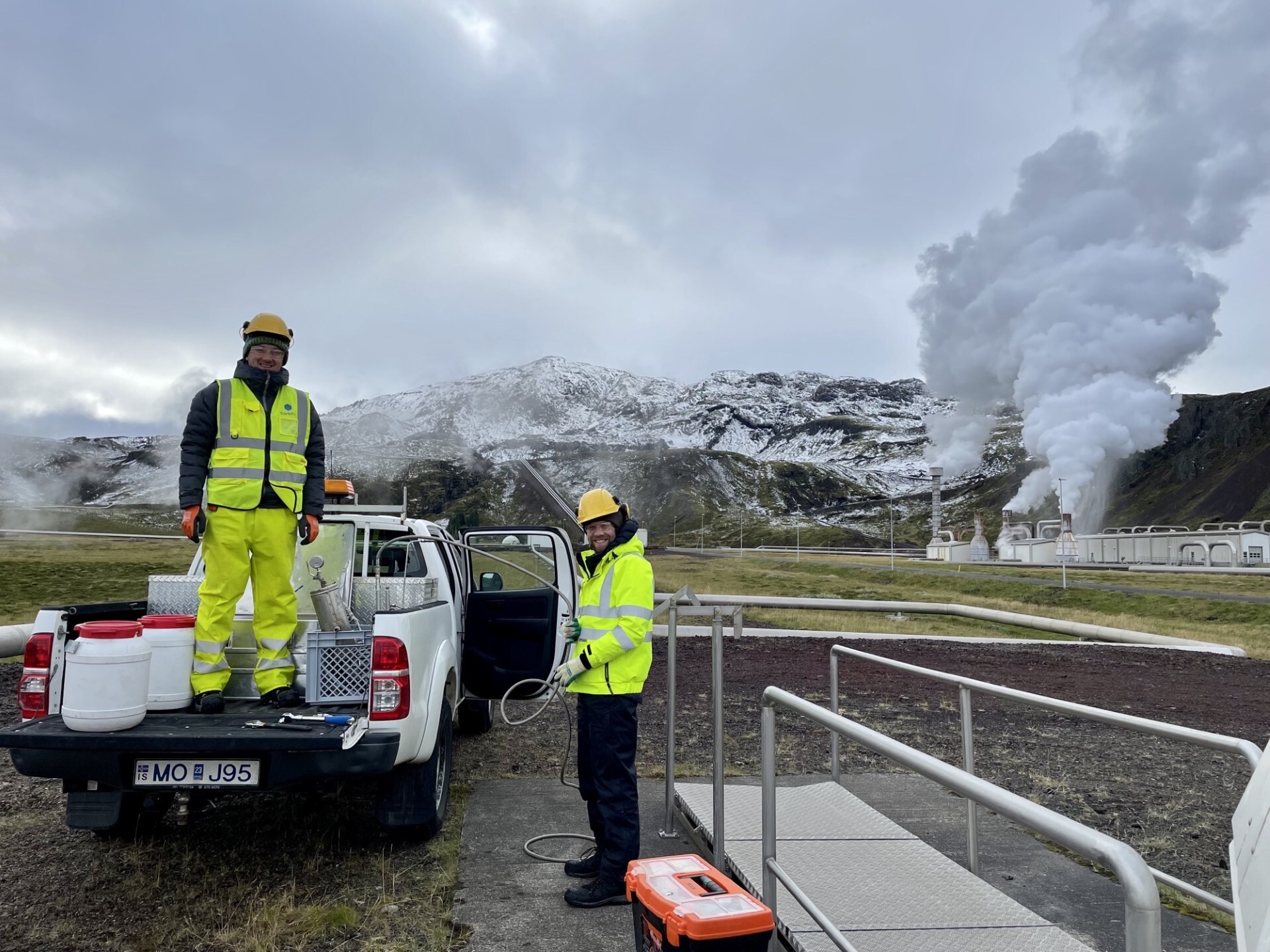
L-R Dr Chris Holdsworth and Prof Stuart Gilfillan collecting samples at a Carbfix site at Nesjavellir geothermal power plant in Iceland
We can use the natural fingerprints already present in the CO2 and water to track when CO2 dissolves and turns to stone, without adding anything extra underground. This has real potential to simplify and reduce the cost of monitoring as storage projects scale up.
Dr Chris Holdsworth
MRV technical specialist, Carbfix; lead author
Simple, reliable checks are essential for public trust in carbon storage and for regulators and investors to sign off major projects. Using these natural fingerprints can streamline monitoring while providing the evidence that mineral storage is permanent.
Professor Stuart Gilfillan
Personal Chair of Geochemistry, University of Edinburgh
These results present an important validation for a novel, sustainable method of measuring carbon capture and storage, which can help deliver help deliver net‑zero targets for emissions‑intensive sectors, as well as support financing and regulation.
Dr Susan Bodie
Head of Innovation Development and Licensing, Edinburgh Innovations
The study, 'Monitoring CO2 mineralisation and dissolution at CarbFix2 using inherent isotopes of CO2, H2O and noble gases,' is published in the International Journal of Greenhouse Gas Control.
Sustainability pledge
The University of Edinburgh is committed to creating a more sustainable world through its world-leading research, teaching, partnerships and innovations.
It is recognised as one of the world’s top universities for environmental and social impact and tackling the climate and environmental emergencies are a key part of the University’s mission to become carbon neutral by 2040.