Power of Innovation
Biotech spinout Kynos Therapeutics acquired by Dr. Falk Pharma

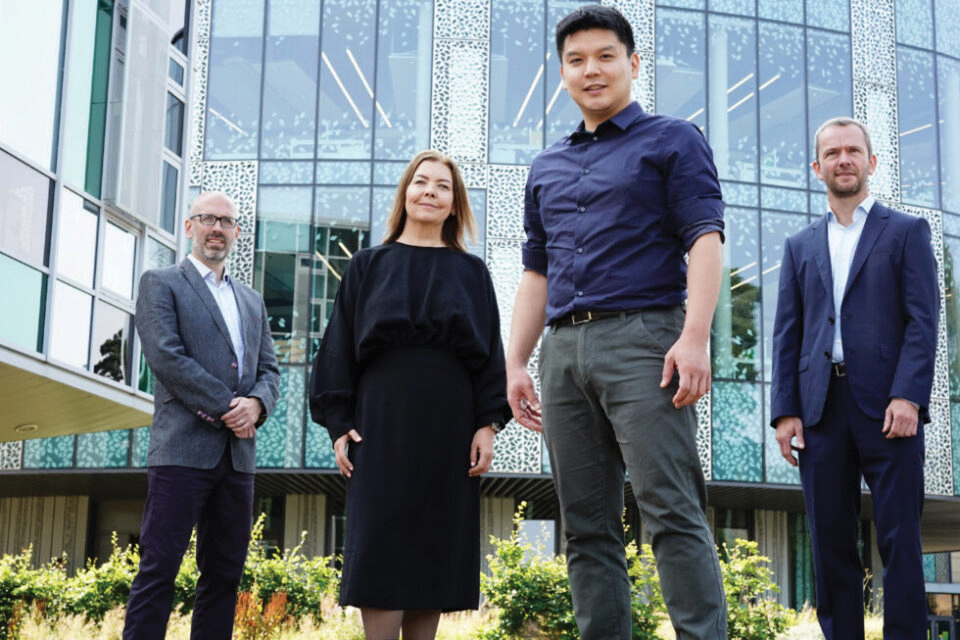
Kynos Therapeutics was established in 2022 as a spinout from the University of Edinburgh's Institute for Regeneration and Repair and the Centre for Cardiovascular Science. It was co-founded by Professors Damian Mole and Scott Webster, alongside founding investor Epidarex Capital. The company also received investment from Epidarex Capital, IP Group, and Scottish Enterprise, and has been led by CEO Jonathan Savidge since its formation.
Since its launch, Kynos advanced its lead candidate, KNS366, a first-in-class inhibitor of the KMO enzyme, through a Phase I clinical trial. The study demonstrated that KNS366 was safe and well tolerated, while achieving dose-dependent inhibition of KMO and modulation of downstream metabolites.
Following the acquisition, Dr. Falk Pharma has incorporated KNS366 into its development pipeline, with an initial focus on treating acute pancreatitis.
Edinburgh Innovations played a key role in supporting the company's creation through industry partnerships, technology transfer, and company formation. Proceeds returned to the University from the sale of its shares and royalties on intellectual property will be reinvested to support future spinouts and startup companies.
Biotech startup MiAlgae raises £14m for new production facility
It was a big year for biotech startup MiAlgae, which raised £14m to build an industrial scale production facility and was a finalist in the Earthshot global environment prize.
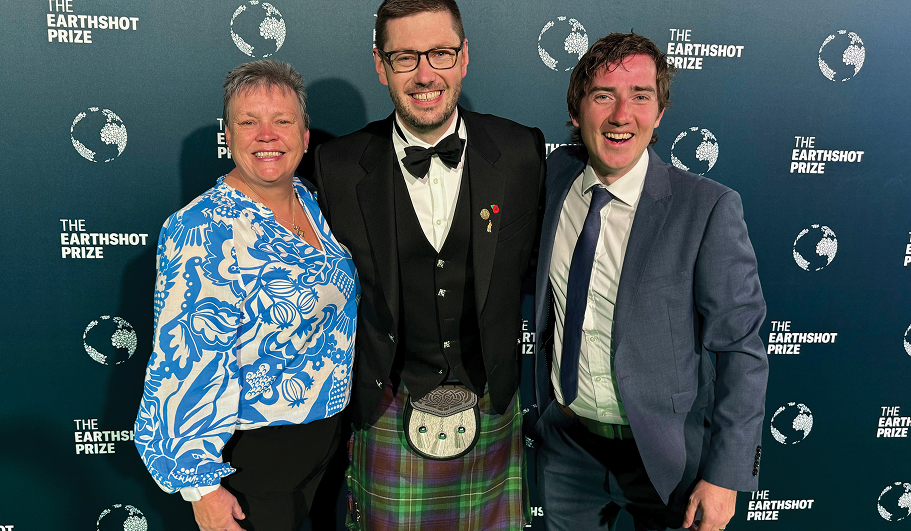
Founded by Douglas Martin while he was studying for an MSc in Synthetic Biology and Biotechnology in 2016, MiAlgae uses co-products from the whisky industry to sustainably produce Omega-3 for fish feed.
The company has now reached commercial-scale of its product, NaturAlgae, at its demonstrator site in Balfron, Stirlingshire. The expansion will boost MiAlgae’s production capacity, fuel its global growth, and create new ‘green’ jobs. New venture capital investors SWEN Blue Ocean, Clay Capital, and Rabo Ventures joined existing backers Equity Gap, Scottish Enterprise and Old College Capital (OCC), amongst others, in the oversubscribed funding round. In December, MiAlgae and OCC travelled to South Africa as finalists
New spinout CGEN set to transform offshore renewables
CGEN Engineering launched in October, with modular generator technology the founders say could reduce the levelised cost of energy for offshore renewables by 10 to 15 per cent.
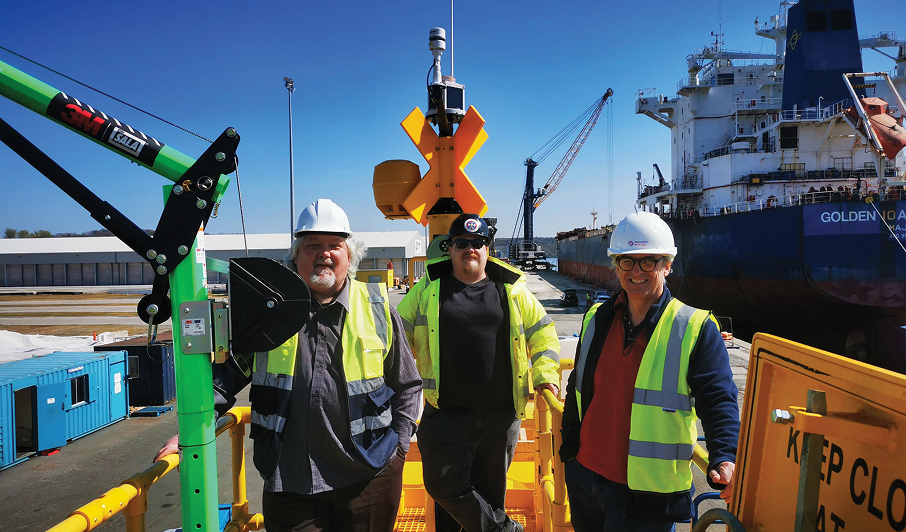
Its lightweight, stackable generator system can be easily transported to onshore and offshore wind, wave, and tidal installations, where it is assembled into a complete power system for converting mechanical energy into electricity.
In contrast with conventional systems, each module can be added, replaced or moved individually, meaning energy companies can keep operations running without long downtimes. They can also upgrade their system over time without major overhauls.
Invented by Professor Markus Mueller of the University’s School of Engineering and developed by CGEN’s managing director, research fellow Dr Joseph Burchell, alongside mechanical and manufacturing engineer Mike Galbraith, the team found that their technology can increase the operational life of installations by 30 to 40 per cent when compared to conventional generator systems. CGEN participated in Innovate UK’s ICURe accelerator programme and received support from EPSRC’s Impact Acceleration Account and Scottish Enterprise. It was supported to spin out by Edinburgh Innovations and received seed funding from OCC.
Awards for staff and student entrepreneurs
University of Edinburgh student and staff companies triumphed in this year’s national entrepreneurship awards. At Converge, E.V.A Biosystems, co-founded by Dr Alexander Speakman, a PhD graduate of the Institute of Bioengineering, won the Converge top prize in the Net Zero category.

The startup is developing selectively degradable plastics that can detect their environment, such as seawater or landfill, and degrade themselves in response. E.V.A. also scooped the IBioIC award and, later in the year, announced a partnership with Coca-Cola.
Other Converge winners were Seasat, which uses satellite images and machine learning to monitor coastal water conditions and SolarSub, whose system of floating solar panels addresses the challenges of overheating and reduced efficiency in water-based solar farms. SolarSub, co-founded by School of Engineering alumni Sebastiaan Schalkwijk and James Taylor, also won at Scottish Edge, alongside SimPat, with its AI-powered online medical education platform; Sunsave Solutions, which aims to provide low-cost, clean electricity to rural communities worldwide, and digital entrepreneurship programme Creator Campus.
Winning partnerships
SolarSub won again at the Scottish Knowledge Exchange Awards, as did the partnership between longstanding University of Edinburgh spinout Canon Medical Research Europe and Professor Sotos Tsaftaris, of the University’s School of Engineering.
The relationship with Professor Tsaftaris has contributed to increased inward investment and headcount in Canon Edinburgh, which now employs 135 people, and has helped Canon Medical Japan develop expertise and manage risk in AI and healthcare. Canon Medical has also joined the University’s new Causal AI in Healthcare (CHAI) Hub. And three University of Edinburgh companies were named finalists in Scotland’s Life Sciences Awards 2025: biotech company Dyneval, based at the Roslin Innovation Centre, under CEO Dr Tiffany Wood. Other finalists were Roslin CT, which span out of the Roslin Institute in 2006 and exited in 2022, and the four founders of student startup Bioliberty, School of Engineering graduates Rowan Armstrong (CEO) and Ross O’Hanlon (CTO) and cofounders Conan Bradley and Shéa Quinn.
New spinout Trogenix unveils revolutionary cancer treatment platform
Spinout Trogenix emerged from stealth mode, unveiling a revolutionary new technology platform that achieves unprecedented precision in targeting aggressive cancers, starting with brain cancer.
Pre-clinical trials have shown its technology can kill glioblastoma cancer cells, leaving nearby healthy cells untouched in a way previous therapies have not managed, whilst also activating the body’s immune system against tumours. Currently, only 25% of glioblastoma patients survive beyond one year.
Trogenix’ Synthetic Super-Enhancer (SSE) precision viral immunotherapy technology, Odysseus, uses a combination of gene control, machine learning, gene therapy and precision targeting to attack the cancer cells and stimulate the immune system. Studies demonstrated curative responses with no toxicity and evidence of persistent anti-tumour immunity. Phase 1/2 clinical trials in human patients are planned for spring 2026.
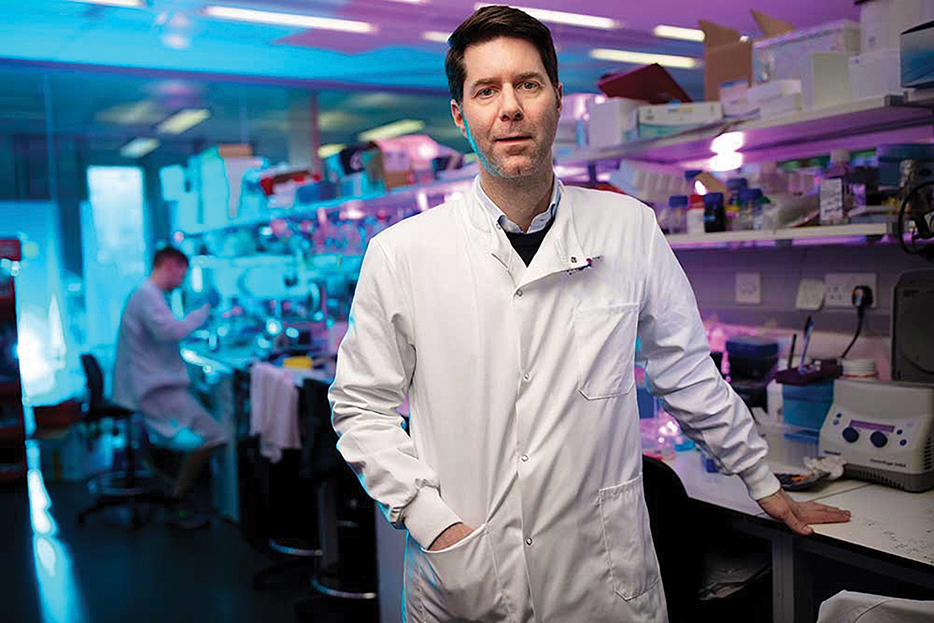
Trogenix emerged from groundbreaking research led by Professor Steve Pollard of the University’s Institute for Regeneration and Repair, working with the UK Centre for Mammalian Synthetic Biology and the Cancer Research UK Scotland Centre. It was co-founded by investor 4BIO Capital, which specialises in creating breakthrough therapeutic companies.
The company has also received investment from IQ Capital, Cancer Research Horizons, the US National Brain Tumor Society, AIN Ventures and Old College Capital (OCC), and was supported to spin out by a deal team at Edinburgh Innovations. Dr Ken Macnamara, a veteran gene therapy executive who held leadership roles at Bayer/AskBio and Synpromics was appointed as Chief Executive Officer.
64
company launches
Neuranics raises £6m for magnetic sensing
Deep tech semiconductor company Neuranics, a joint spinout between the universities of Edinburgh and Glasgow, raised £6m in April to accelerate global growth and commercial adoption of its magnetic sensing technology.
The investment round was led by Blackfinch Ventures, with participation from Archangels, and continued support from Par Equity, the University of Glasgow, and Old College Capital, the University of Edinburgh’s venture investment fund.
The funding will drive the company’s next phase – strengthening its team, accelerating innovation across core technologies, and enabling widespread integration of its Tunnelling Magnetoresistance (TMR) technology into emerging and high-tech markets, including extended reality (XR), wearables, and digital health monitoring.
£113m
invested in University associated companies
Spinout Forth Tx to revolutionise fibrosis treatments
In March, Forth Therapeutics (Forth Tx) launched with a precision therapeutics platform to tackle fibrosis across multiple organ systems. The biotech company builds on pioneering research from Professor Neil Henderson, out of the University’s Institute for Regeneration and Repair.
![AdobeStock_417770040[DC Studio] 1.jpg](https://ei-test.everyone-do4.com/storage/Sgz167zypEZ7M7mQ65R627qUA5Z1K1Q2HQelXsqK.jpg)
It was supported by the venture creation team at Edinburgh Innovations, and backed by Sofinnova Partners and Old College Capital. Its assets target key fibrosis pathways, underpinned by state-of-the-art ‘omics’ technology. Omics are methods used to study biological molecules (like DNA, RNA, proteins, and metabolites) on a large scale. Fibrosis, or tissue-scarring in response to an injury, can lead to severe organ damage or even death. Forth Tx also holds access to one of the largest single-cell human liver disease datasets in the world, accelerating precision drug discovery and development.
Resolution: investment for novel macrophage cell therapy
In October, biotech spinout Resolution Therapeutics raised £63.5m in a series B financing round led by healthcare investor Syncona Ltd.
![AdobeStock_417121632[fizkes] 1.jpg](https://ei-test.everyone-do4.com/storage/fi9th8m6Nb2RakV7WqUm3EWt3ugPNcYaslwvrgEz.jpg)
The company, founded on research by Professor Stuart Forbes of the Institute for Regeneration and Repair, demonstrated preclinical proof of concept of safety and efficacy for RTX001, a novel autologous engineered macrophage cell therapy for end-stage liver disease. In November, data presented from the completed MATCH Phase 2 trial showed strong promise for RTX001 as a treatment. A new Phase I/II EMERALD trial started in October 2025.
Investing at the early stages
Old College Capital (OCC) is the University’s in-house venture investment fund. Part of Edinburgh Innovations, OCC manages Edinburgh’s early-stage investment activities and shareholdings, supporting exciting ideas and technologies emerging from the University.
In 2024/25, £113m was invested into University-associated companies, from OCC and our partner investors under our co-investment model. This is a fantastic outcome given continuing market headwinds, which saw the overall number of UK venture investment deals fall by between 15% and 20% over the period.
“Through initiatives like Launch 20 and Launch 50, OCC invested £3.8m into 25 companies this year. As part of our evergreen model, the University has committed to reinvesting returns and proceeds – such as from the Kynos exit this year – into the next generation of founders. OCC’s assets under management remain at more than £65m.

Dr Kate Fox
Head of Investment
1,236
jobs created by 102 OCC portfolio companies